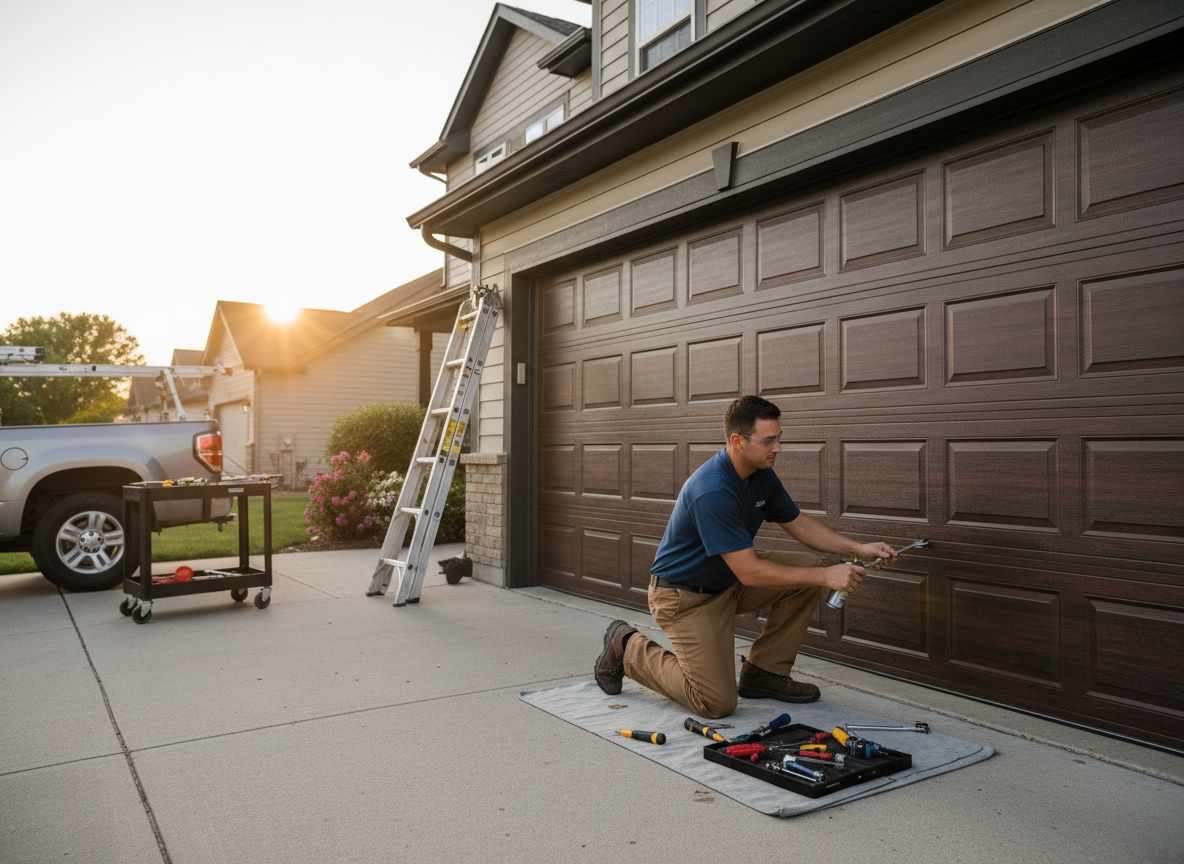
Homeowners in Olathe often notice a garage door that starts making grinding sounds or moves unevenly when temperatures swing between freezing nights and warmer days. These symptoms usually trace back to components like torsion springs, rollers, and cables that lose tension or develop friction over time. Ignoring the early signs can lead to sudden failure where the door sticks partway open or drops unexpectedly, creating both inconvenience and safety risks around the home.
Common failure points during maintenance checks include extension or torsion springs that have stretched past their safe cycle limit and cables that show fraying near the bottom brackets. Safety sensors can also drift out of alignment from vibration or minor settling of the foundation, causing the door to reverse without reason. A technician will typically test each part under load rather than just visually inspecting, because hidden stress in the track brackets or opener drive gear often shows up only during operation.
Safety considerations come first during any maintenance visit, especially with the high tension stored in the springs and the risk of the door falling if a cable snaps. Homeowners should plan to discuss whether a worn spring can be safely adjusted or needs full replacement, and whether the existing opener still meets current reversal-force standards. Questions worth asking include how often the torsion spring should be lubricated given Olathe’s humidity swings and whether the current rollers are rated for the door’s weight.
Maintenance also helps decide between continued repairs and eventual replacement by revealing the overall condition of the track alignment and hinge hardware. When multiple parts show wear at once, replacing just one item may leave the system vulnerable to related failures soon after. An honest assessment lets the homeowner weigh the cost of ongoing part swaps against the smoother, quieter performance of a refreshed system.
Technician insight
In Olathe the thing that catches most people out with Garage Door Maintenance is how our freeze-thaw cycles loosen track brackets on homes built before 2005; the original wood framing has moved just enough that a spring balance test done in July will read differently once January hits.
Binding Rollers After Foundation Settling
The door began sticking three feet from the floor on cold mornings. Inspection showed the track had pulled away slightly where the garage slab meets the older home’s foundation. The provider realigned the track, replaced two worn rollers, and adjusted spring tension to match the new travel. The door now travels smoothly without reversing on its own.
Garage Door Maintenance Services We Offer
✓Torsion Spring Inspection
Checks the spring for stretch, rust, and cycle count to prevent sudden breakage during daily use.
✓Cable Wear Assessment
Examines both lift cables for fraying or kinks near the drums and bottom brackets.
✓Safety Sensor Alignment
Verifies that the photo-eye sensors remain level and free of debris so the door reverses properly.
✓Track and Roller Service
Straightens minor track bends and replaces worn rollers to reduce noise and binding.
✓Opener Mechanism Review
Tests drive gear, belt or chain tension, and force settings for reliable open-and-close cycles.
How it works
- 1
Describe The Issue
Call the listed number and explain the sounds, movement problems, or recent changes noticed with the garage door.
- 2
Schedule The Visit
An independent provider serving Olathe confirms a time that works with your schedule.
- 3
On-Site Evaluation
The technician inspects springs, cables, sensors, and tracks while the door operates under normal load.
- 4
Review Findings
You receive a clear explanation of needed adjustments or part replacements and can decide next steps.
Pricing
Pricing varies by the condition of springs, cables, and opener components found during inspection.